Power Meters: Types, Features, Benefits, Applications & Buying Guide
News Details
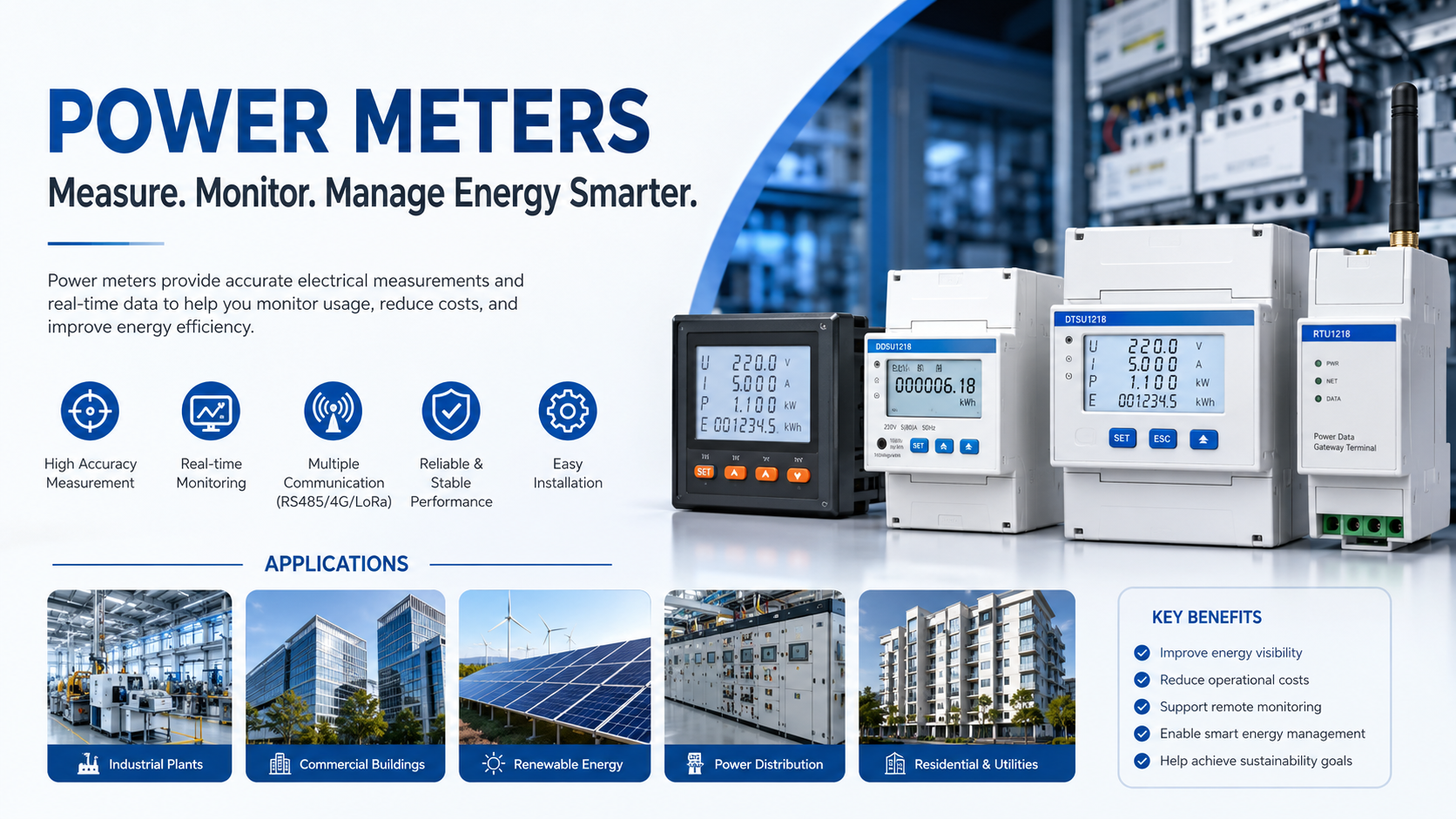
Power Meters: Types, Features, Benefits, Applications, and Buying Guide
Power meters are widely used to measure and manage electricity. They help users track power use, find energy waste, and improve energy management. Today, power meters are no longer limited to basic electrical measurement. Smart power meters can also support remote reading, real-time monitoring, load control, and data communication.
As energy costs continue to rise, accurate power measurement is becoming more important. Therefore, power meters are now used in homes, commercial buildings, factories, industrial parks, and many other electrical systems.
In this guide, we will explain what power meters are, how they work, the main types, key features, benefits, applications, and how to choose the right power meter.
What Are Power Meters?
Power meters are electrical devices used to measure electrical power and energy. Depending on the model, a power meter can measure parameters such as voltage, current, active power, reactive power, power factor, and energy consumption.
Traditional power meters usually require users to check readings on site. However, smart power meters can collect and send data automatically. With communication technologies such as RS485, 4G, WiFi, and LoRa, users can monitor electricity data from a central system.
Therefore, modern power meters are an important part of smart energy management.
How Do Power Meters Work?
Power meters measure electrical values from an electrical circuit. The meter collects voltage and current data and then calculates the related power and energy values.
For example, active power shows how much useful electrical power a system is using. Energy consumption is normally recorded in kilowatt-hours (kWh).
Modern digital power meters use electronic components and digital processing to provide stable measurement. In addition, smart models can store data and send it to another device or platform.
This makes it easier to monitor electricity use over time.
Types of Power Meters
Different electrical systems need different types of power meters. Therefore, users should choose a meter based on the system type, installation method, measurement needs, and communication requirements.
Single-Phase Power Meters
Single-phase power meters are designed for single-phase AC systems. They are commonly used in homes, offices, small shops, apartments, and small commercial buildings.
They can measure electricity use for individual circuits or small loads. Some smart single-phase power meters also support prepaid functions, load control, and RS485 communication.
For example, Saving Meter's DDSU1218 single-phase electronic energy meter is designed for single-phase AC active energy measurement. It supports functions such as prepayment, load control, and RS485 communication, with 4G communication available as an option. Its stated performance follows IEC 62053-21 and IEC 62053-22 requirements.
Three-Phase Power Meters
Three-phase power meters are designed for three-phase electrical systems. They are widely used in factories, commercial buildings, industrial equipment, and power distribution systems.
These meters can provide a broader view of electricity use across three phases. As a result, they are useful for industrial power monitoring and energy management.
Saving Meter offers several three-phase energy meter products for industrial and commercial applications, including electronic energy meters and smart DIN-rail meters.
DIN-Rail Power Meters
DIN-rail power meters are designed to fit inside electrical distribution cabinets. Their compact size makes installation easier and saves cabinet space.
Moreover, DIN-rail power meters are useful for sub-metering. They can be installed for different buildings, departments, machines, tenants, or production lines.
Saving Meter's DTSU1218 three-phase four-wire DIN-rail meter supports RS485 communication and Modbus and DL/T 645 protocols. It is designed for applications such as energy management, power monitoring, and industrial automation.
Smart Power Meters
Smart power meters combine energy measurement with communication and data functions.
Instead of reading the meter manually, users can collect data remotely. This makes smart power meters a good choice for large buildings, factories, utilities, and distributed energy systems.
Depending on the model, communication may use RS485, 4G, LoRa, WiFi, or other technologies.
Key Features of Modern Power Meters
Modern power meters offer many features that can improve energy monitoring and management.
Accurate Energy Measurement
First, accurate measurement is the most important function of a power meter.
A reliable power meter can help users measure electricity consumption and understand changes in power use. This data can then be used for energy analysis and cost control.
Depending on the model, a power meter may measure:
-
Voltage
-
Current
-
Active power
-
Reactive power
-
Power factor
-
Active energy
-
Reactive energy
-
Maximum demand
Real-Time Power Monitoring
Real-time monitoring allows users to see electricity data as it changes.
For example, a factory can monitor the power use of different production lines. If consumption suddenly increases, the management team can investigate the reason.
As a result, real-time power monitoring can help improve energy efficiency and reduce waste.
RS485 Communication
RS485 is a common communication method for power meters.
It is widely used in industrial automation and energy management systems. Multiple meters can communicate with a central system through an RS485 network.
In addition, protocols such as Modbus can help connect power meters with energy management software, PLC systems, and other equipment.
4G Communication
4G communication allows smart power meters and related devices to send data through cellular networks.
This is useful for remote sites where wired network connections may be difficult to install.
Saving Meter provides 4G smart energy meter solutions and a Power Data Gateway Terminal that uses 4G for upstream communication. This supports remote electricity monitoring and centralized meter reading.
LoRa Communication
LoRa is another useful communication option for smart energy systems.
It can connect multiple meters over a local wireless network. Therefore, it can be useful for factories, industrial parks, commercial buildings, and other large sites.
Saving Meter's RTU1218 Power Data Gateway Terminal uses 4G wireless communication upstream and LoRa wireless meter reading downstream. The system is designed for electricity monitoring, centralized meter reading, remote management, and sub-metering.
Prepayment and Load Control
Some smart power meters also provide prepayment and load control functions.
These functions can help users manage electricity use and reduce payment risks. They can be useful for utilities, rental properties, commercial buildings, and industrial projects.
Benefits of Power Meters
Using power meters can provide several benefits for businesses and energy users.
Better Energy Visibility
Power meters provide clear electricity data. Therefore, users can understand how much energy different areas or devices consume.
This is the first step toward better energy management.
Lower Energy Costs
Accurate power data can help users find areas of high consumption.
For example, a factory may find that some machines continue to use a large amount of electricity during non-working hours. Managers can then change operating schedules and reduce unnecessary energy use.
Remote Meter Reading
Smart power meters reduce the need for manual meter reading.
Instead, meter data can be collected remotely. This saves time and reduces the workload for energy management teams.
Easier Sub-Metering
Sub-metering allows users to measure electricity consumption in different areas.
For example, a commercial building can install separate meters for different tenants. A factory can also use separate power meters for different workshops or production lines.
Better Energy Management
Power meters provide the basic data needed for energy management systems.
Once the data is connected to a software platform, users can monitor consumption, compare different areas, analyze trends, and improve energy efficiency.
Applications of Power Meters
Power meters can be used in many different industries and environments.
Industrial Power Monitoring
Factories use large amounts of electricity. Therefore, power monitoring is important for controlling energy costs.
Power meters can monitor production lines, machines, workshops, and other electrical loads. They can also support sub-metering and energy analysis.
Commercial Buildings
Office buildings, shopping centers, hotels, and other commercial properties can use power meters to track electricity use.
In multi-tenant buildings, power meters can also help measure individual tenant consumption for billing and management.
Industrial Parks
Industrial parks may have many buildings and electrical loads.
A network of smart power meters can collect data from different areas. With 4G, LoRa, or RS485 communication, the data can then be sent to a central platform.
Smart Buildings
Smart buildings need reliable energy data.
Power meters can provide real-time electricity information and connect with building management or energy management systems.
This helps building owners understand energy use and improve operating efficiency.
Renewable Energy Systems
Power meters can also be used with solar and other renewable energy systems.
They can help measure electricity generation, consumption, and power flow. With communication functions, users can monitor the system remotely.
Power Meters vs Energy Meters
Power meters and energy meters are closely related, but they may focus on different measurements.
A power meter often focuses on electrical power and related parameters. An energy meter mainly records accumulated electrical energy, usually in kWh.
However, modern smart energy meters can measure both energy consumption and other electrical parameters.
Therefore, when selecting a product, users should check the actual specifications instead of looking only at the product name.
How to Choose the Right Power Meters
Choosing the right power meter is important for accurate measurement and long-term use.
1. Check the Electrical System
First, identify whether the system is single-phase or three-phase.
You should also check the rated voltage, current, frequency, and wiring method.
2. Define Your Measurement Needs
Next, decide what you need to measure.
If you only need energy consumption, a basic energy meter may be enough. However, if you need voltage, current, power factor, demand, and real-time data, you may need a more advanced smart power meter.
3. Select the Communication Method
Communication is important for remote energy monitoring.
RS485 is a good choice for wired communication. 4G is useful for remote sites. LoRa can be useful when many meters need to communicate wirelessly within a large area.
4. Consider Installation
For electrical cabinets and distribution panels, DIN-rail power meters are often a practical option.
Their compact design makes installation easier and helps save space.
5. Check Accuracy and Standards
Accuracy is critical when electricity data is used for billing, energy analysis, or management.
Before purchasing, check the meter's accuracy class, applicable standards, certifications, and test requirements.
6. Consider Software Integration
For large energy projects, hardware is only one part of the system.
The power meter should be able to connect with the required software or platform. Check communication protocols, data formats, APIs, and other integration options before making a decision.
Saving Meter Power Meter Solutions
Saving Meter focuses on smart energy meters and energy management solutions. Its product range includes single-phase and three-phase electric meters, DIN electric meters, 4G solutions, energy efficiency terminals, STS electric meters, and other metering products.
The company also provides solutions that combine meters, data acquisition devices, communication technologies, cloud software, and system integration. This approach helps users build complete energy monitoring systems instead of using individual meters alone.
For remote energy monitoring, Saving Meter provides solutions based on RS485, 4G, and LoRa. Its RTU1218 Power Data Gateway Terminal, for example, combines 4G and LoRa communication to support centralized meter reading, electricity monitoring, remote management, and sub-metering.
Conclusion: Choose the Right Power Meters for Better Energy Management
Power meters are essential tools for modern electricity measurement and energy management.
From single-phase power meters to three-phase meters, DIN-rail meters, and smart meters with 4G, RS485, or LoRa communication, different solutions are available for different applications.
The right power meter can provide accurate data, real-time monitoring, remote meter reading, and better energy visibility. Therefore, before buying, consider the electrical system, measurement requirements, communication method, installation type, accuracy, standards, and software integration.
With the right power meter solution, businesses can better understand electricity use, reduce energy waste, and build a smarter energy management system.


